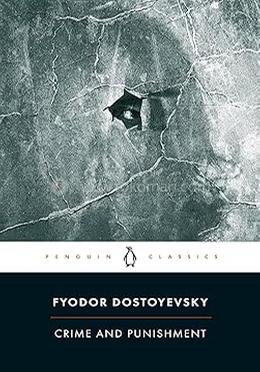
Crime and Punishment by Fyodor Dostoevsky
Crime and Punishment by Fyodor Dostoevsky
At the time, Dostoevsky owed large sums of money to creditors and was trying to help the family of his brother Mikhail, who had died in early 1864. After appeals elsewhere failed, Dostoevsky turned as a last resort to the publisher Mikhail Katkov and sought an advance on a proposed contribution.[7] He offered his story or novella (at the time, he was not thinking of a novel)[8] for publication in Katkov's monthly journal The Russian Messenger—a prestigious publication of its kind, and the outlet for both Ivan Turgenev and Leo Tolstoy. Dostoevsky, having been engaged in polemical debates with Katkov in the early 1860s, had never published anything in its pages before. In a letter to Katkov written in September 1865, Dostoevsky explained to him that the work was to be about a young man who yields to "certain strange, 'unfinished' ideas, yet floating in the air".[9] He planned to explore the moral and psychological dangers of the ideology of "radicalism", and felt that the project would appeal to the conservative Katkov.[10] In letters written in November 1865, an important conceptual change occurred: the "story" had become a "novel". From then on, Crime and Punishment is referred to as a novel.[11]
Product features
Product features
Materials and care
Materials and care
Merchandising tips
Merchandising tips
Share